Working with and creating heirloom jewellery
16th April 2026 - Customer location: Ravenshoe
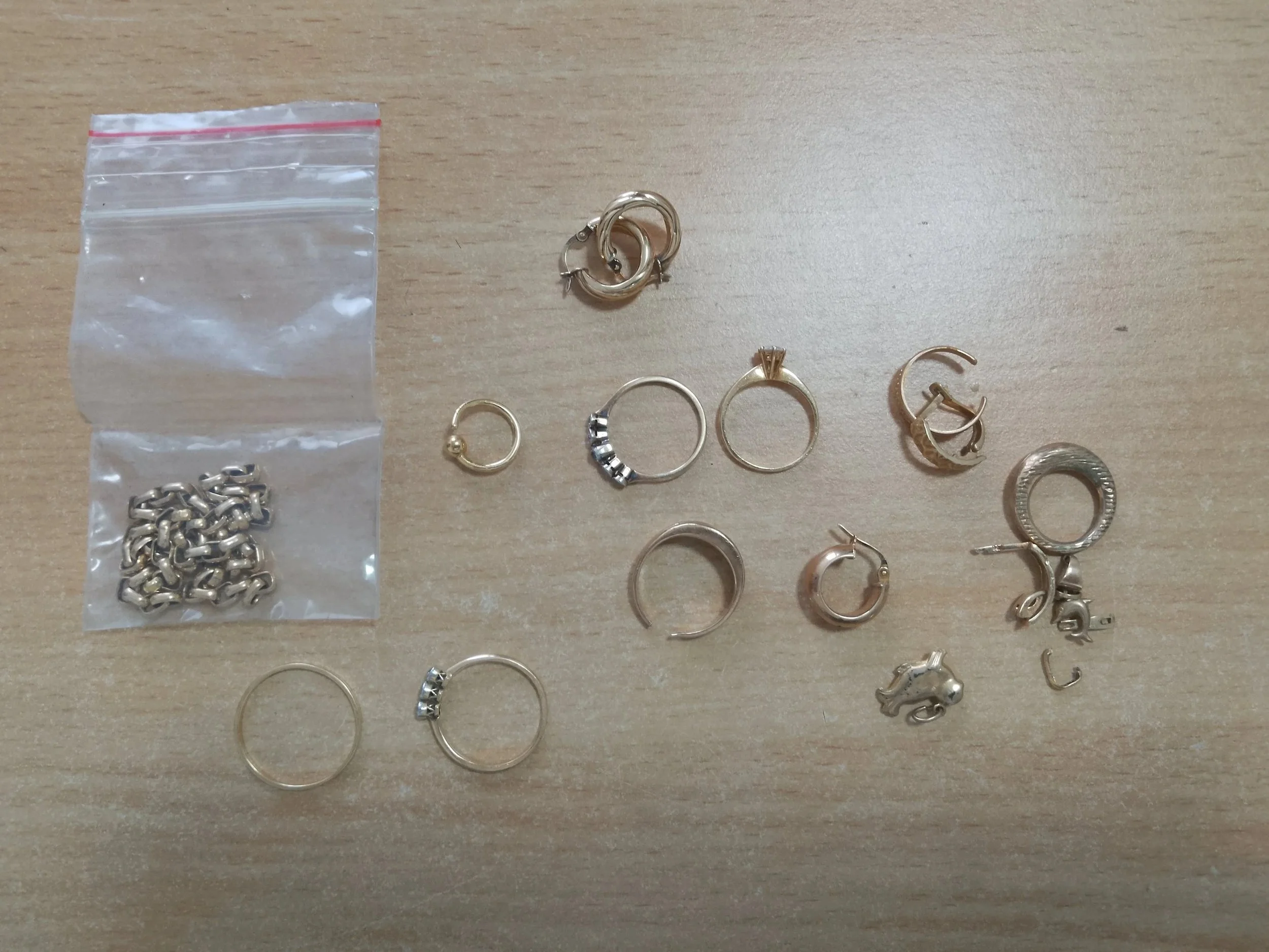
Amongst the jewellery above are some very sentimental pieces to my customers and others that are just old broken pieces of jewellery. My job was to highlight what was important to the customer and create something that she loved to wear and could pass down to her children when the time came.
In the case of this jewellery some of the older poorer quality single cut diamonds were of the greatest sentimental value so they were incorporated into the design as a priority over cleaner and more modern cut gems we had to use. What was left over would be used for something else later.
The desired design
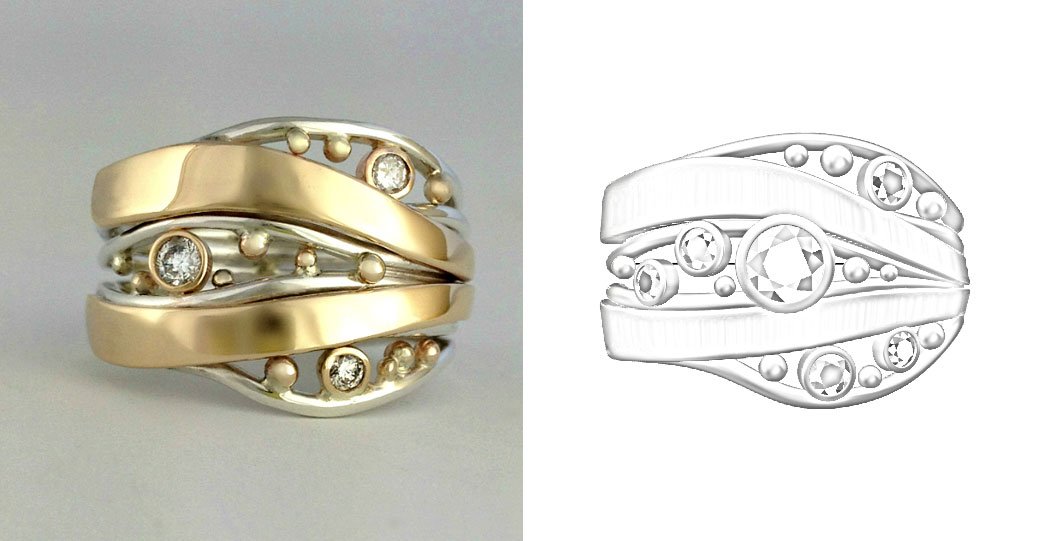
The desired design on the left and a mockup to the right scaled to her diamond and finger sizes.
It is not very often that what the customer wants to create from her old jewellery results in a piece so close to the starting design. Emboldened by the success so far with the design, the customer then wanted to look at adding even more.
Sometimes less is more
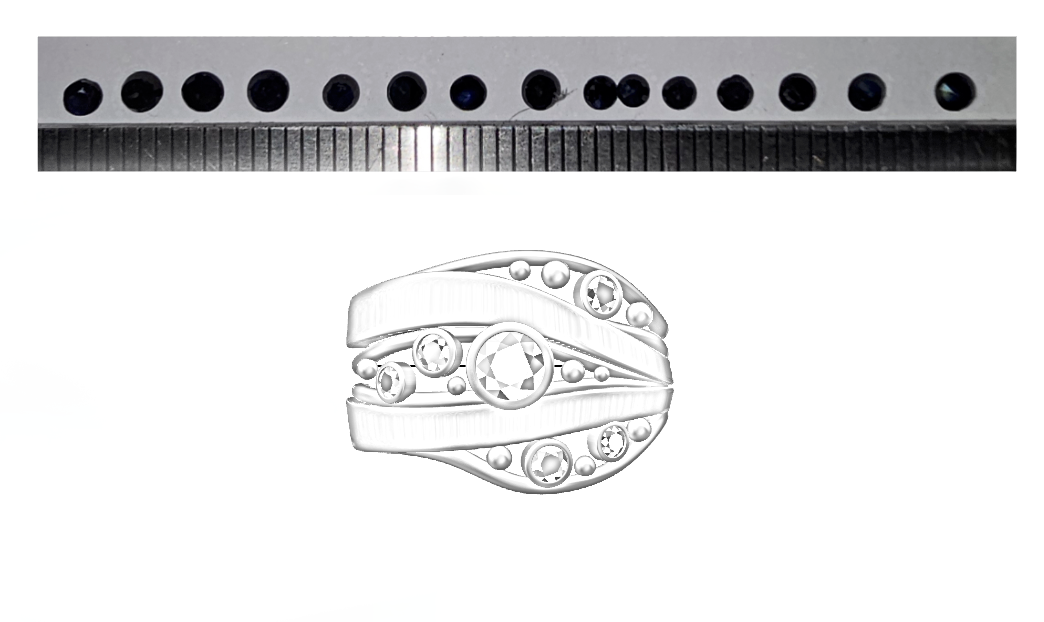
The sapphires she thought were tiny scaled in the image to her ring ….where would they go?
She also had some loose sapphires passed down to her that she wanted to incorporate into the ring if possible. Once I showed her the size of what she thought were small sapphires scaled next to the design…….. she decided against adding them to the ring. Less is more sometimes.
I now knew what I was making and what I had to use to make it. I could do a quote…..which was approved.
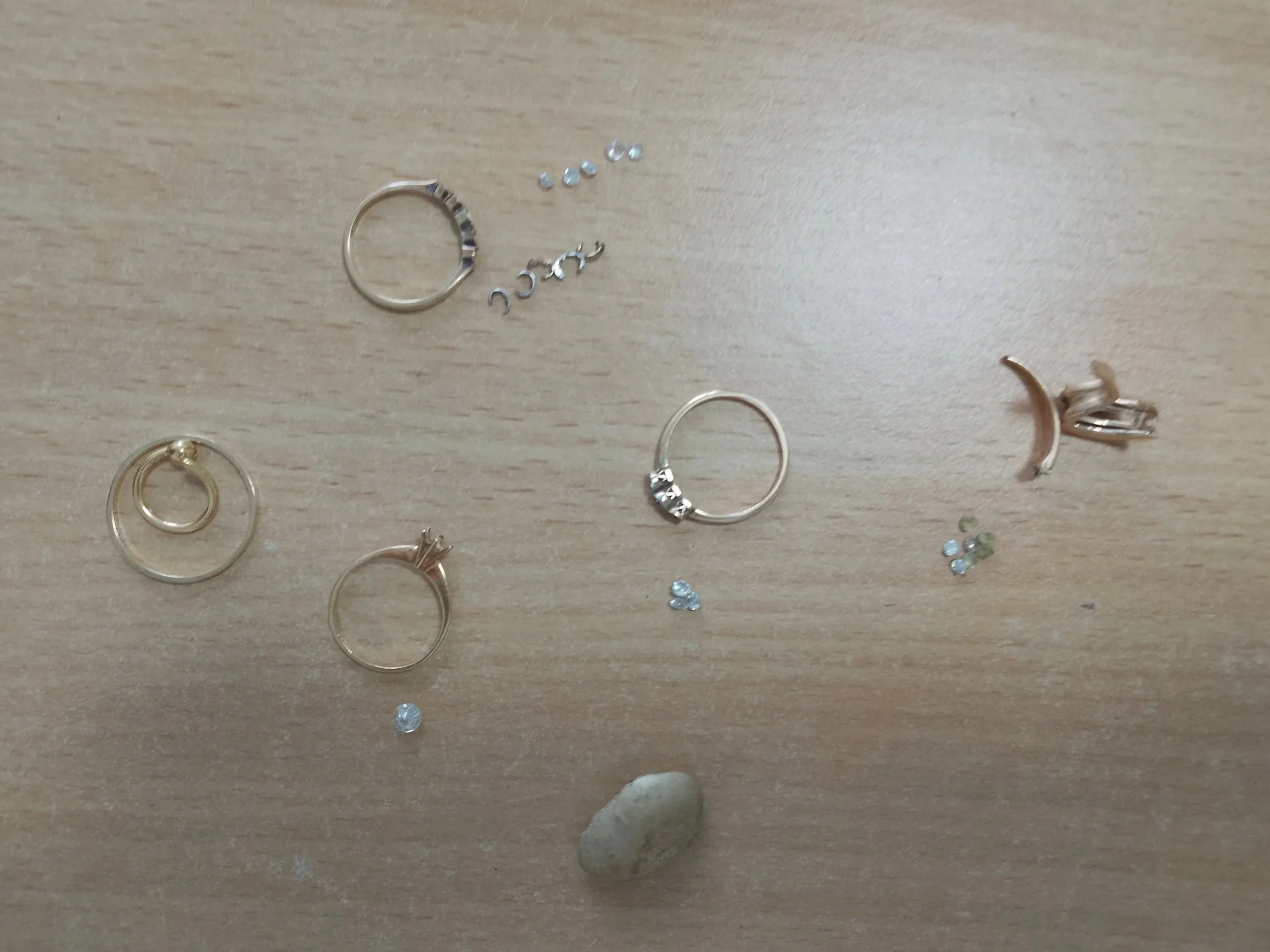
Unsetting the gems and removing any white gold.
The next tasks were to unset the diamonds and remove any white gold. White gold is generally not recyclable without high risk of failure and also the desired ring would be all yellow gold.
I melted down the hollow 9ct jewellery whilst the customer was there to show her how small a volume it would reduce to. The melted gold is shown bottom centre above.
The diamonds were also unset and inspected at this stage. Often gems have hidden flaws/damage under the setting that the customer needs to be informed of prior to making the new piece which may or may not hide them in the same way.
Preparing the gold
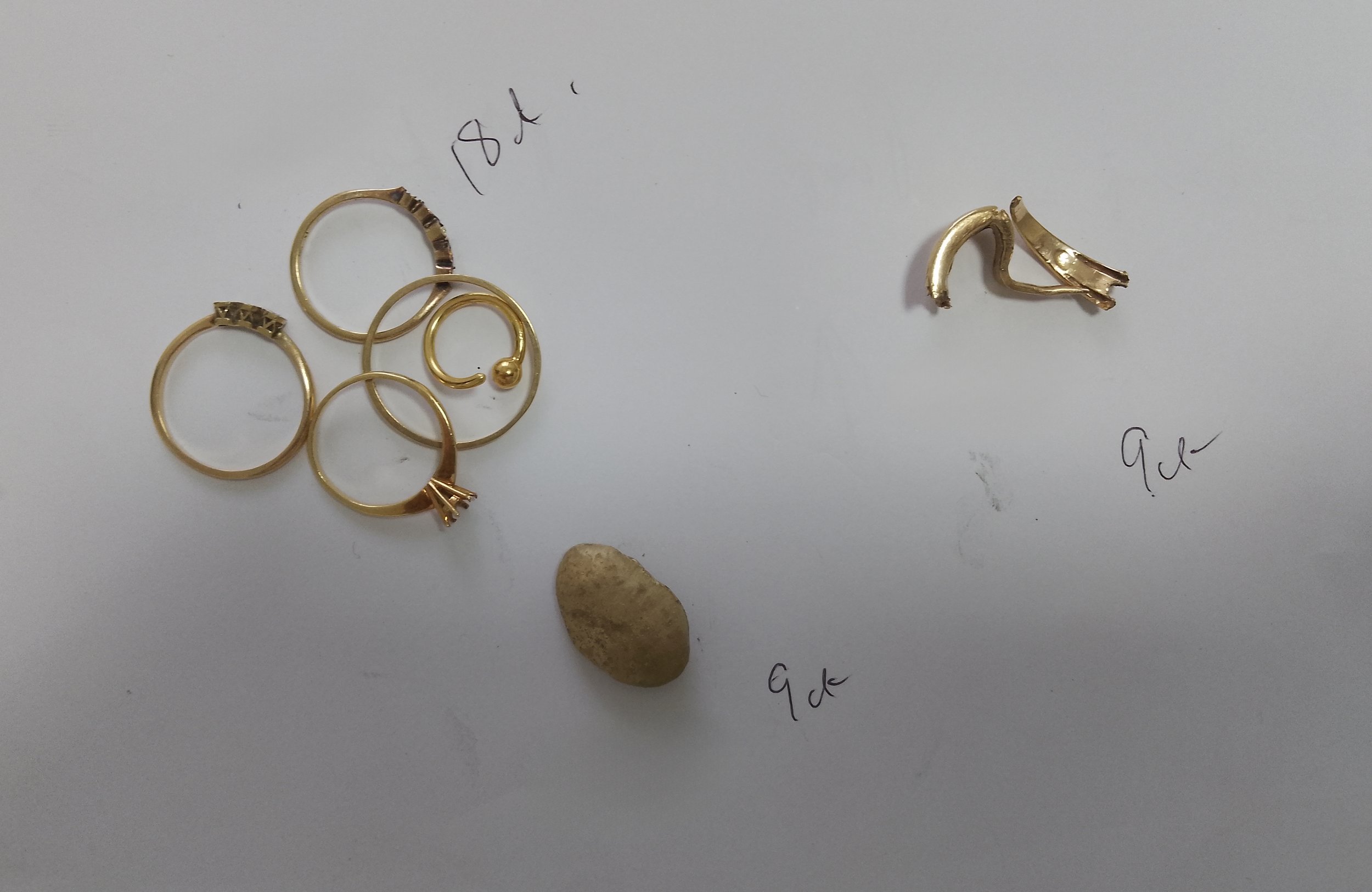
We had a mixture of 9ct and 18ct gold alloys. This was sorted and the 18ct gold then alloyed to 9ct. To understand why so much gold is needed to make a piece of jewellery this blog post on subtractive manufacturing will explain more.
Article: Subtractive Manufacturing a Bushido Cross
The remaining gold would be returned to the customer with the finished piece along with any unused gems.
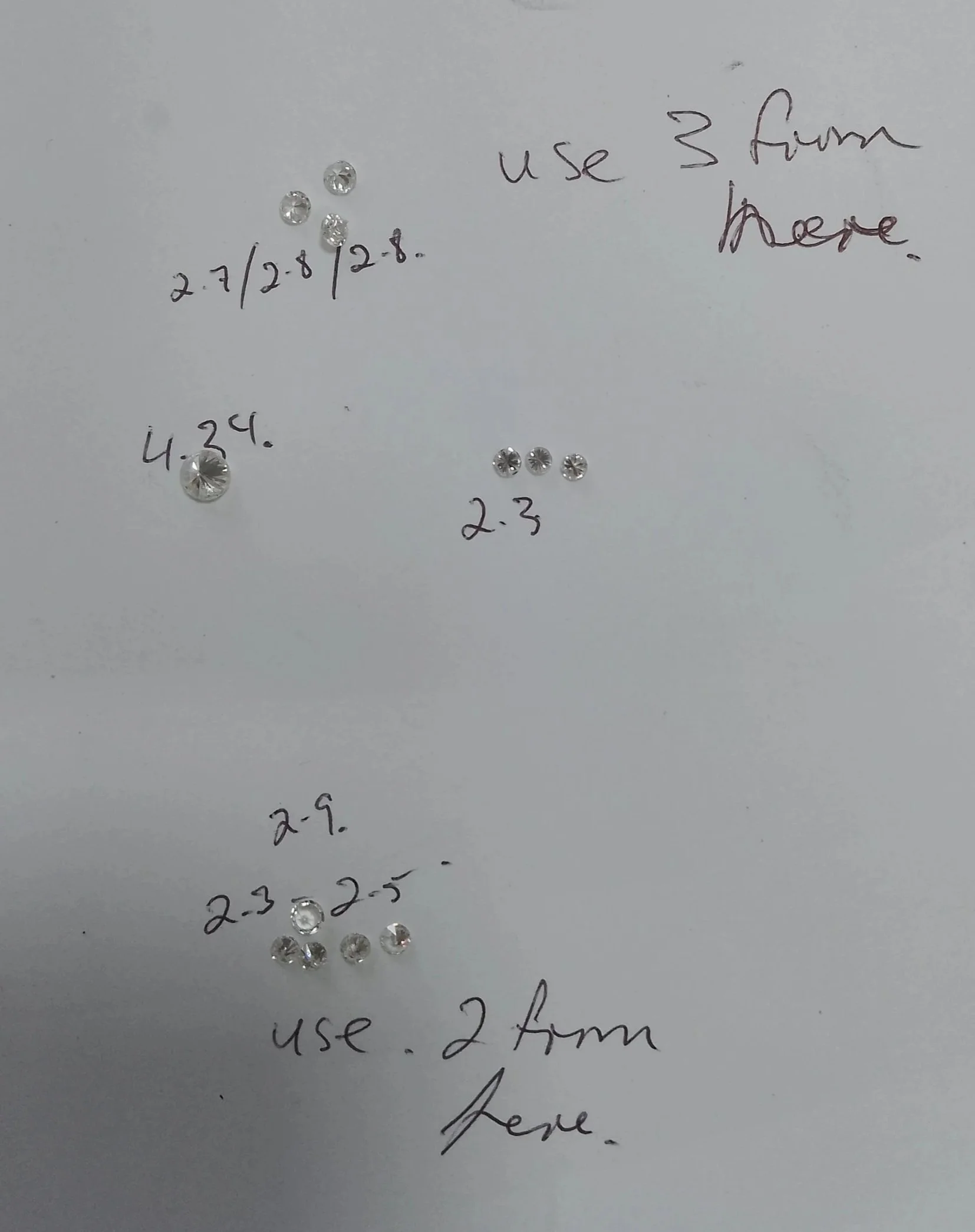
Noting which gems were to be used and measuring them.
Right from the start I was informed that some of the diamonds held more value to the customer so it was prioritised to use them in the design. Once unset I could properly measure them and start to plan for the making of the ring more accurately. A few of the gems were a little larger than I estimated when they were set.
The size draft - confirming the design and exact finger size
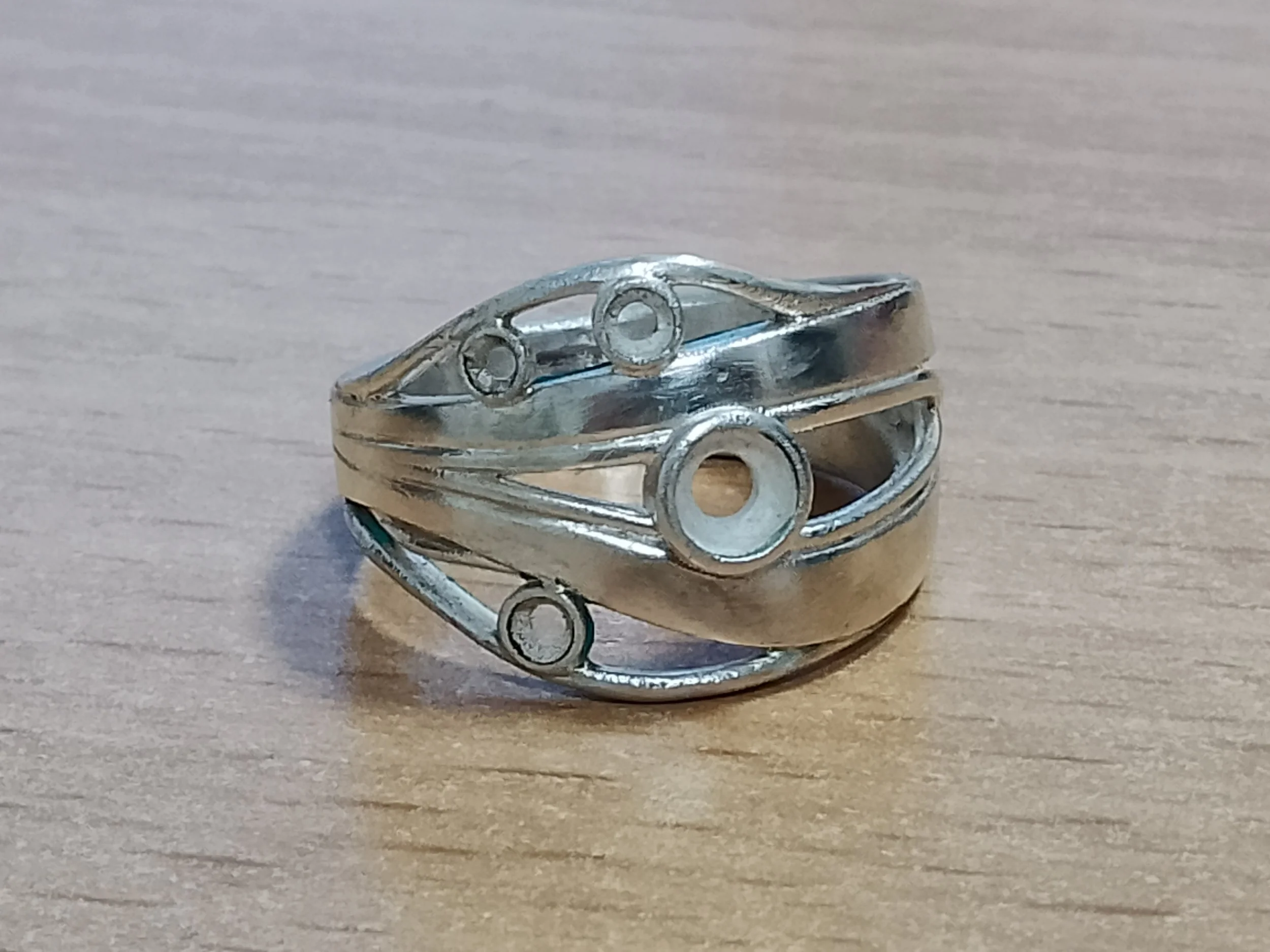
The silver draft used to confirm the finger size and general shape of the ring.
Resizing a ring like this is possible but something to be avoided with a brand new ring. To that end and to ensure that the customer was happy with the general presence of the ring on the hand, we used a size draft created in scrap silver.
Article: Why you should avoid resizing a new ring
In the case of this ring it was a far from complete draft but it did give the customer a very good idea of how the ring would turn out. We modified that drafts size until it was perfect. We now knew the exact size the ring needed to be made to.
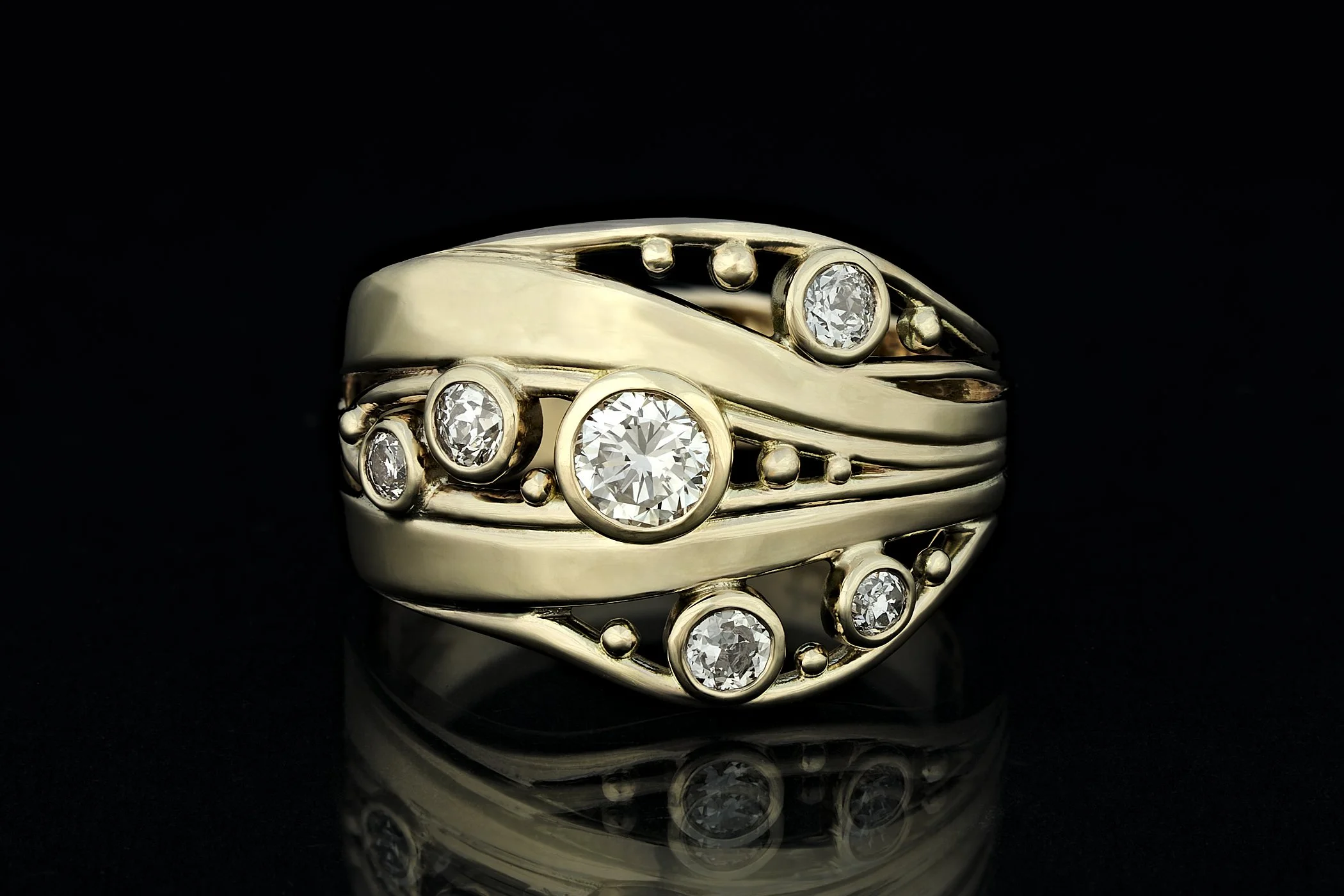
The finished ring.
Above is the finished ring created from heirloom and scrap pieces of jewellery that can now be worn. She loves it and that means success for me. Have a great week.