
Happy New Year 2026
14th January 2026 - Customer location: Cairns
I love people that think differently and this couple ticked a lot of boxes when it comes to the non conventional engagement ring:
using a gem other than a diamond that was fossicked and cut by a relative
timeless (IMO & theirs) old style design selected by the customer
there will be no wedding ring. This ring is made to wear alone as both a wedding and engagement ring. I love the this concept despite it not being good for sales.
On the last point both these customers work in health and cannot wear rings to work. This ring will be a dress ring only and for a topaz that is a good thing. Topaz needs to be looked after as it will not readily survive the challenges of most peoples daily wear without scratching and or chipping.
Getting the size right without the recipient seeing the design
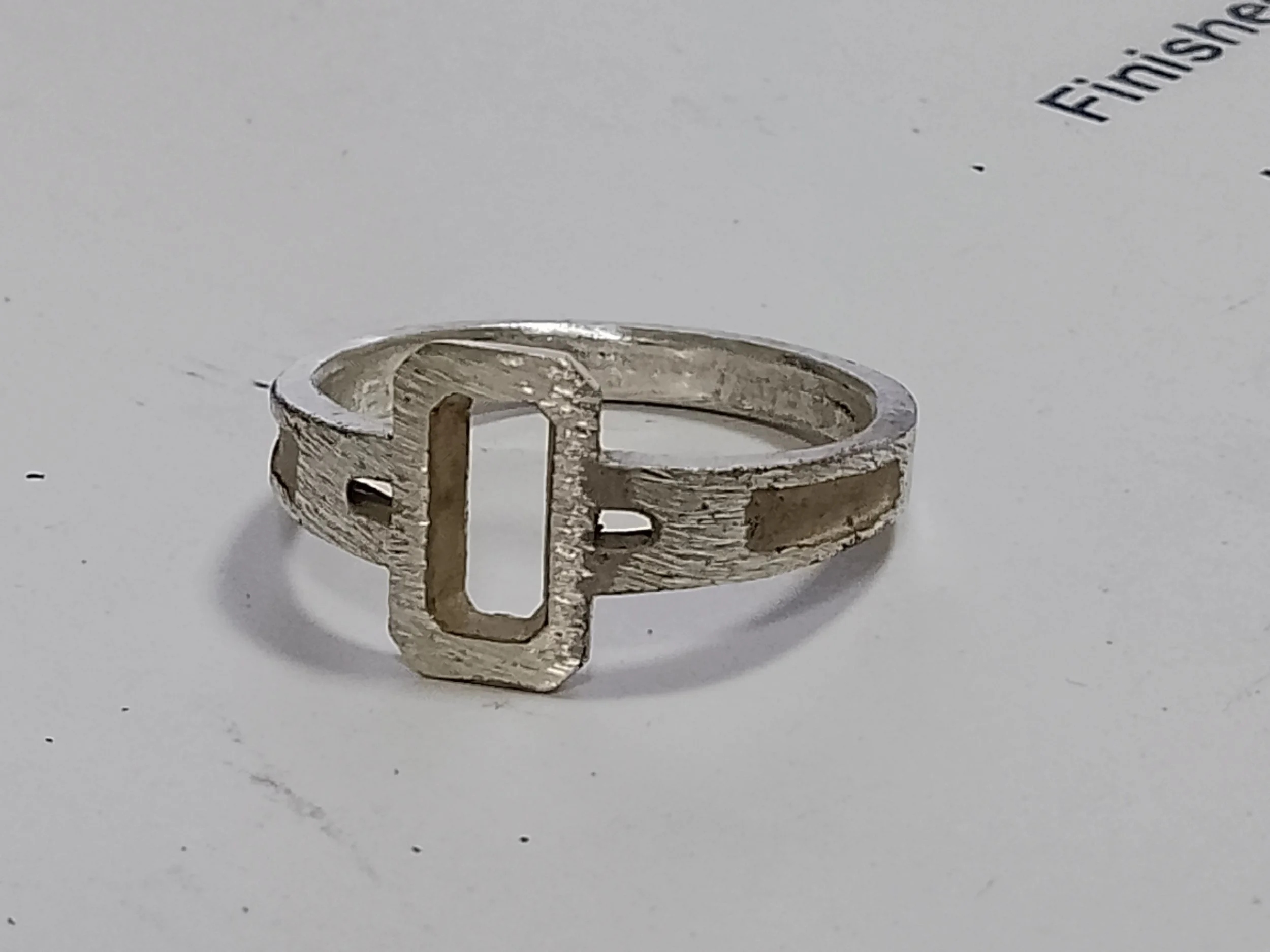
A silver draft sued to confirm the correct finger size without revealing the design.
The ring was not a total surprise for the recipient as we sorted out the size together with the draft above and she knew the gem that was to be used.
The design however was created by the giver of the ring and the recipient did not see the design until the proposal. That is why the sizer was made to replicate the internal impression of the ring on the finger but give away very little of the design.
Increasing the ability to resize the ring later in life
During the design process we discussed how far the scroll work should go around the ring. The customer had seen design work on bands that pretty much spanned the whole ring. That may look great but the further the scroll work went around the ring the possibility of resizing it effectively later reduced. It was decided to go about half way around the ring.
The transparent gem
When a gem is transparent the colour of what is behind the gem can often been seen casting colour through the gem. With this in mind the style of the setting and the material used becomes important.
This customer desired the ring to be all yellow gold. If yellow gold metal was behind the gem then a yellow tint would have been cast through it and the setting also more visible.
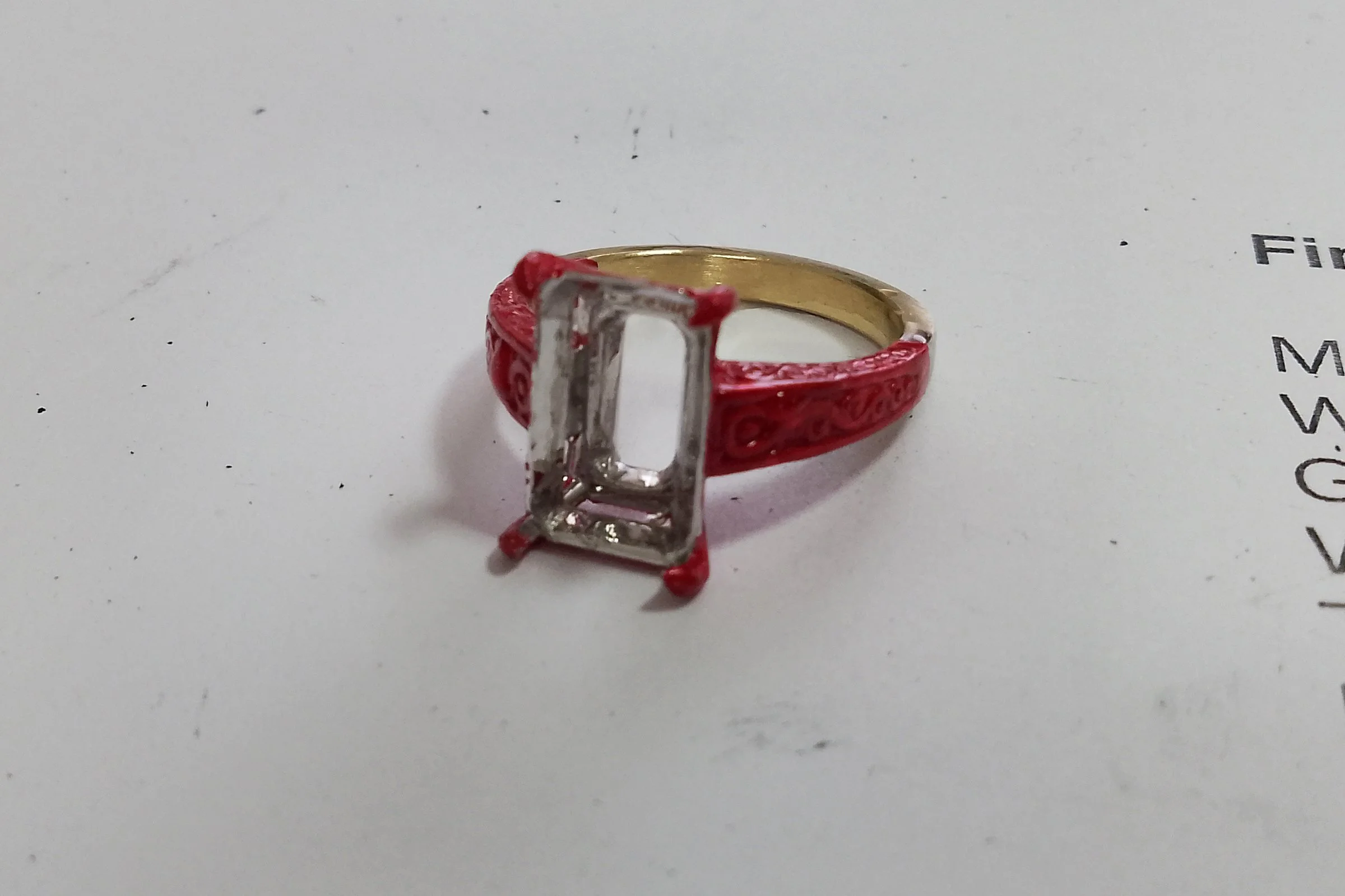
Rhodium plating the inside of the setting to turn it white.
After the right choice of setting the yellow gold behind the gem can be rhodium plated to turn it white. With that area receiving no wear this is almost a permanent change in colour to the metal (you can remove it later if you desire) .
To avoid turning areas white that we wanted to remain yellow they were painted with nail polish that was later removed after the rhodium had been applied. Some people use a plating pen and avoid having to mask areas but I have always done it this way and feel the plating is lot more durable/thicker.
The side of the setting is visible through the gemstone.
After over 40 years of making jewellery I still never get used to the odd look I get when I buy bright red nail polish for masking jewellery :) As you can see from above, the setting is still visible through the gem (more so from side angles) but now after being rhodium plated is not as distracting as it would be if it was yellow.
All the best for 2026 everyone!