
Rainbow Bee-eater
Irvinebank area, October 2026.
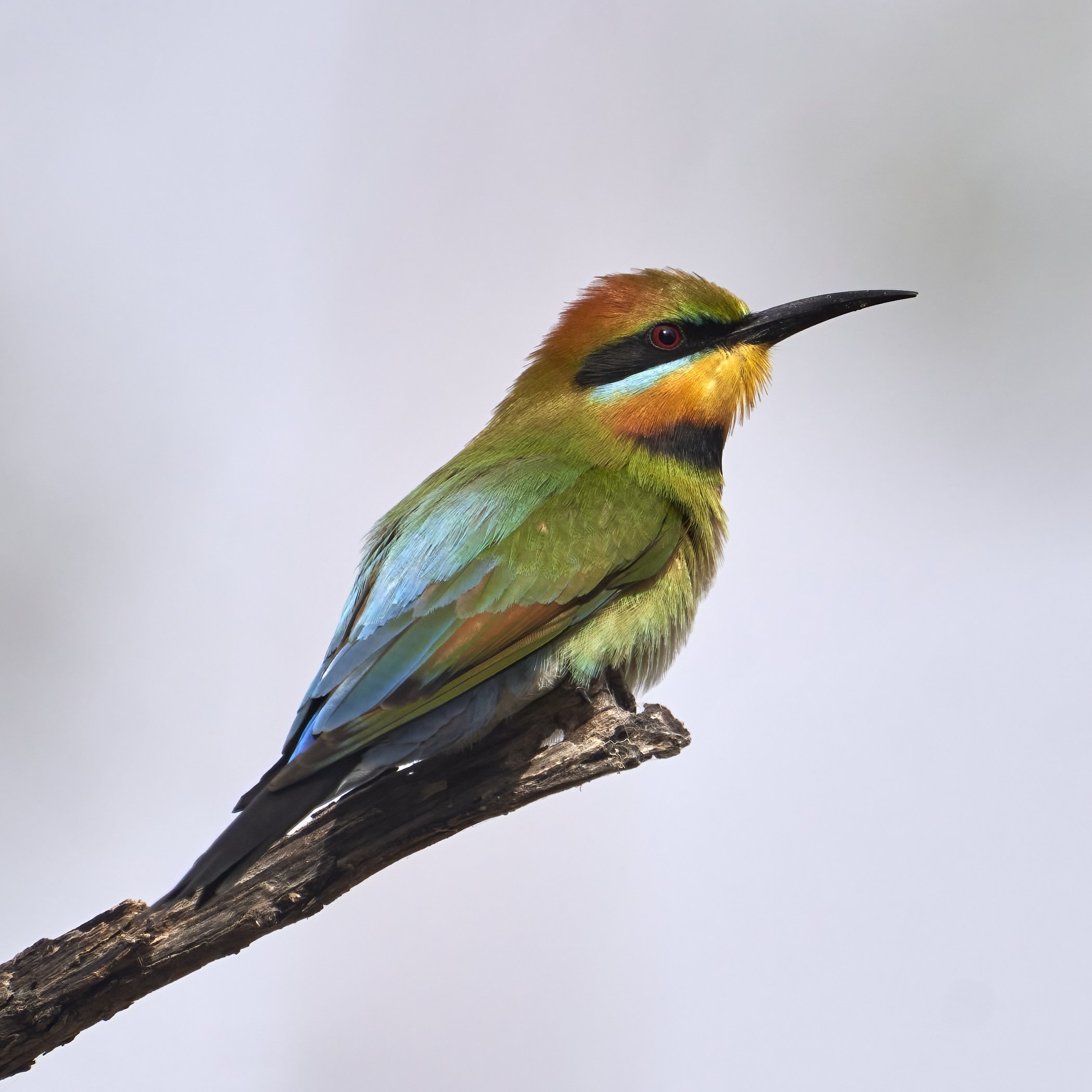
These birds derive their name from their plumage which contains the colours of the rainbow. Both sexes look alike.
Irvinebank area, October 2026.
That plumage however is mostly bright green with a sky bluish rump. The crown is gold and the eyes have a wide dark stripe with a bright blue stripe below. The bill is long and black.
Irvinebank area, October 2026.
The throat has a broad black band across it with orange -gold above. The tail is black with thin streaming feathers in the centre. The female has shorter tail streamers than the male.
Irvinebank area, October 2026.
They live in open woodlands, savannahs, shrublands, semi cleared areas and usually near water. They avoid forest, rainforests and treeless areas.
Irvinebank area, October 2026.
Their voice is a musical trilling. They feed on bees, wasps and other flying insects usually taken in flight.
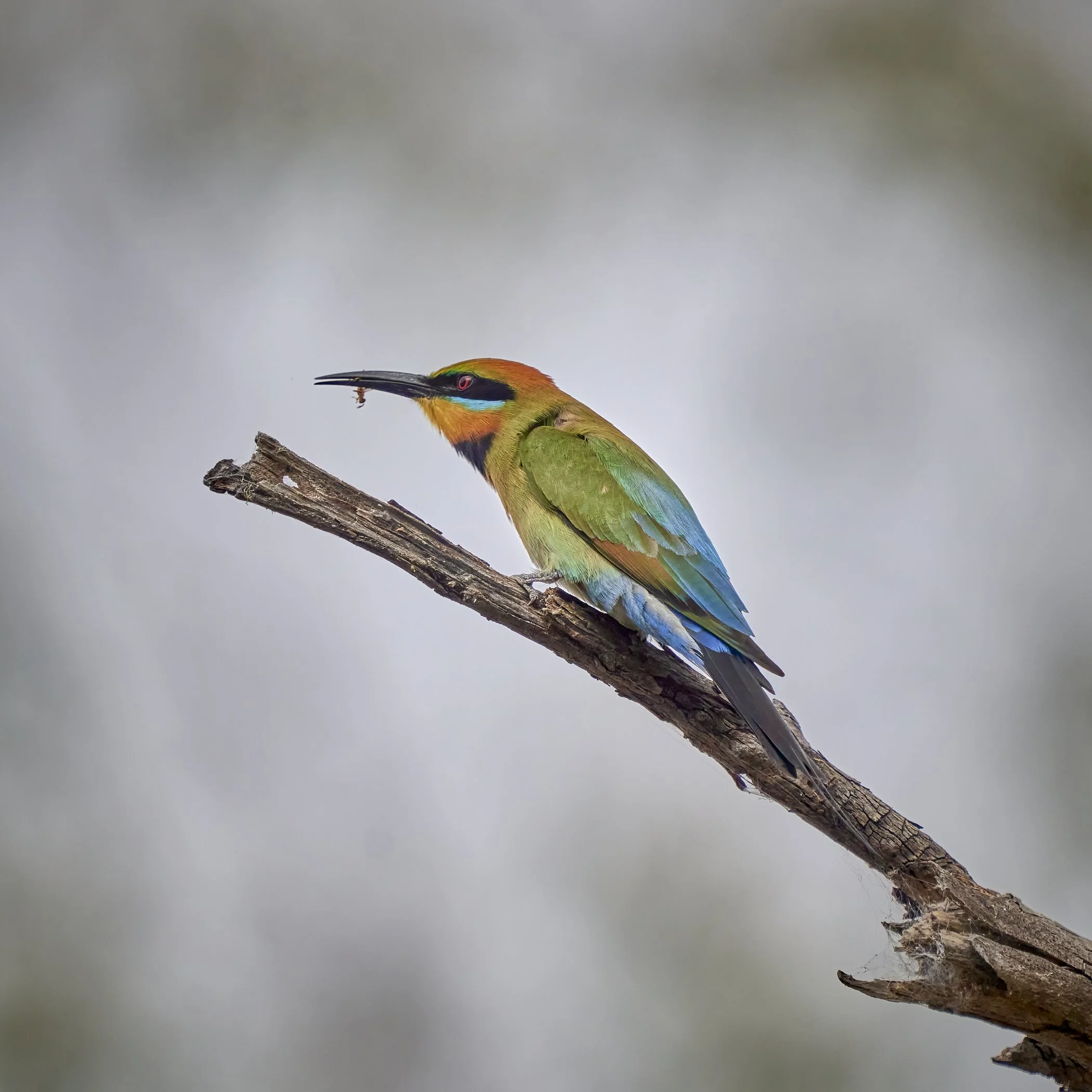
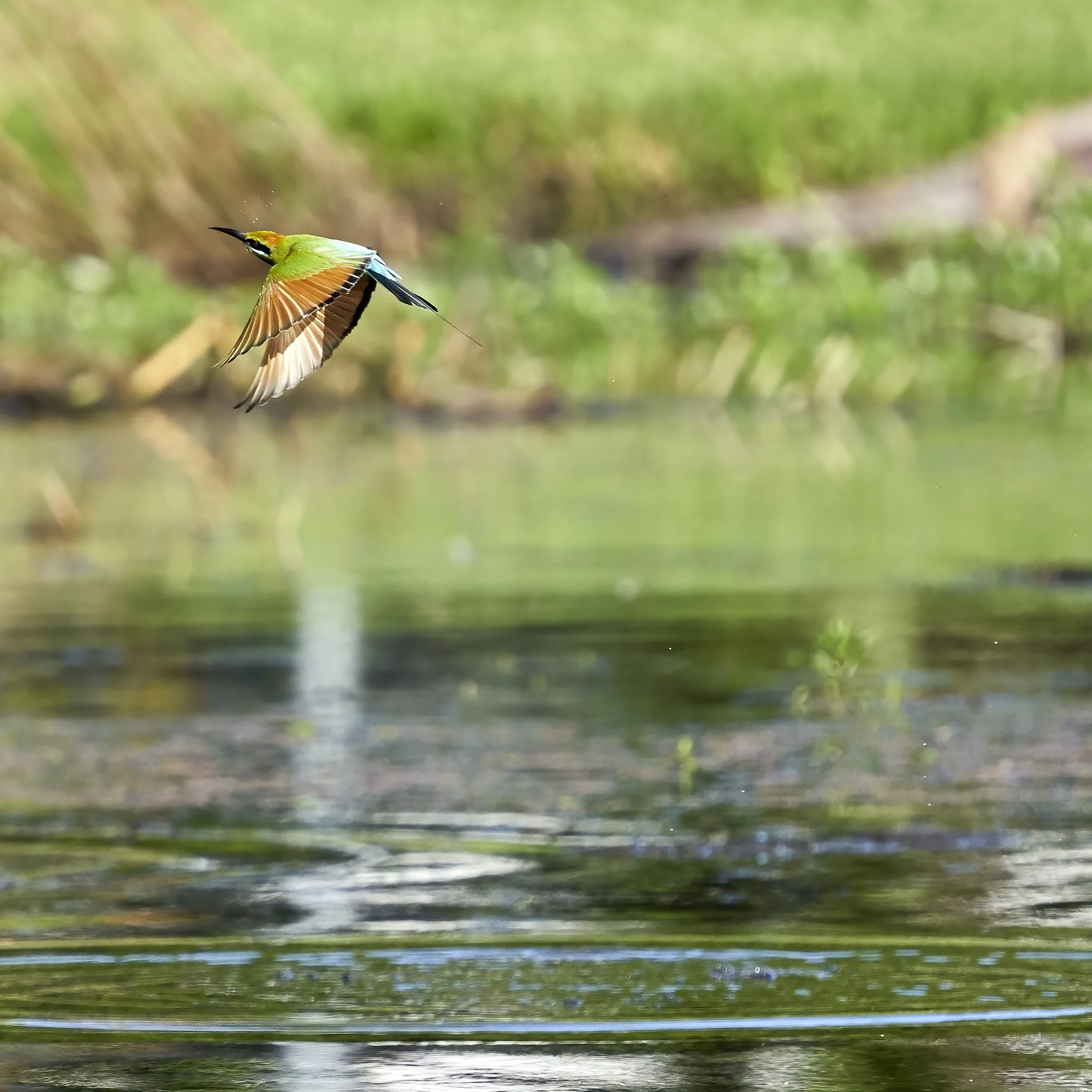
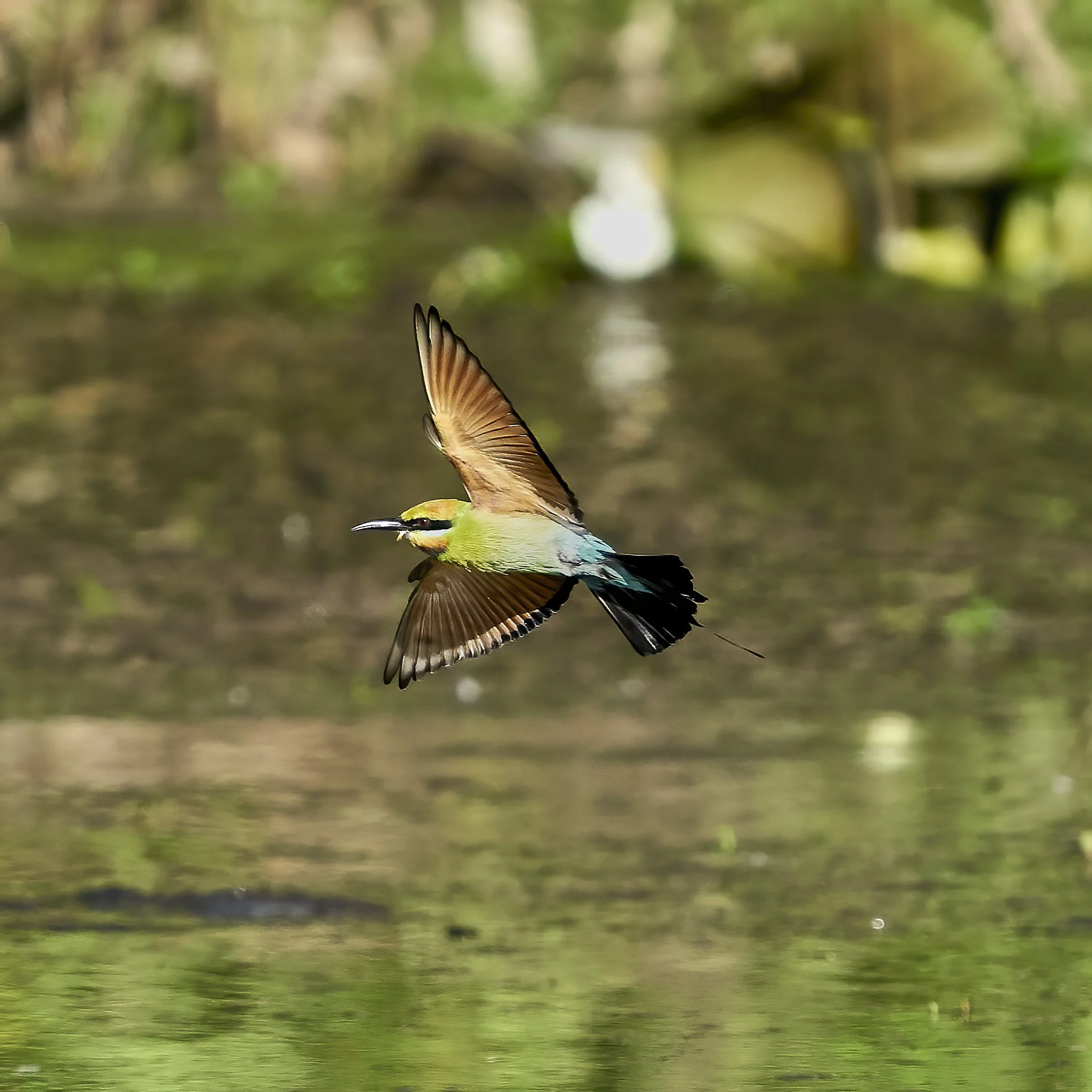
They plunge for aquatic life. The underwings are bright orange. They take their prey back to the perch, batter them against the same before eating.
Immature bird with streamers absent. Irvinebank area, October 2026.
Immature birds are duller, lack tail streamers and their throat band is indistinct.
In the north where I live they breed from September-October and May, They form a 1 metre tunnel in a sandy embankment leading to the nest. They usually lay 3-7 eggs.